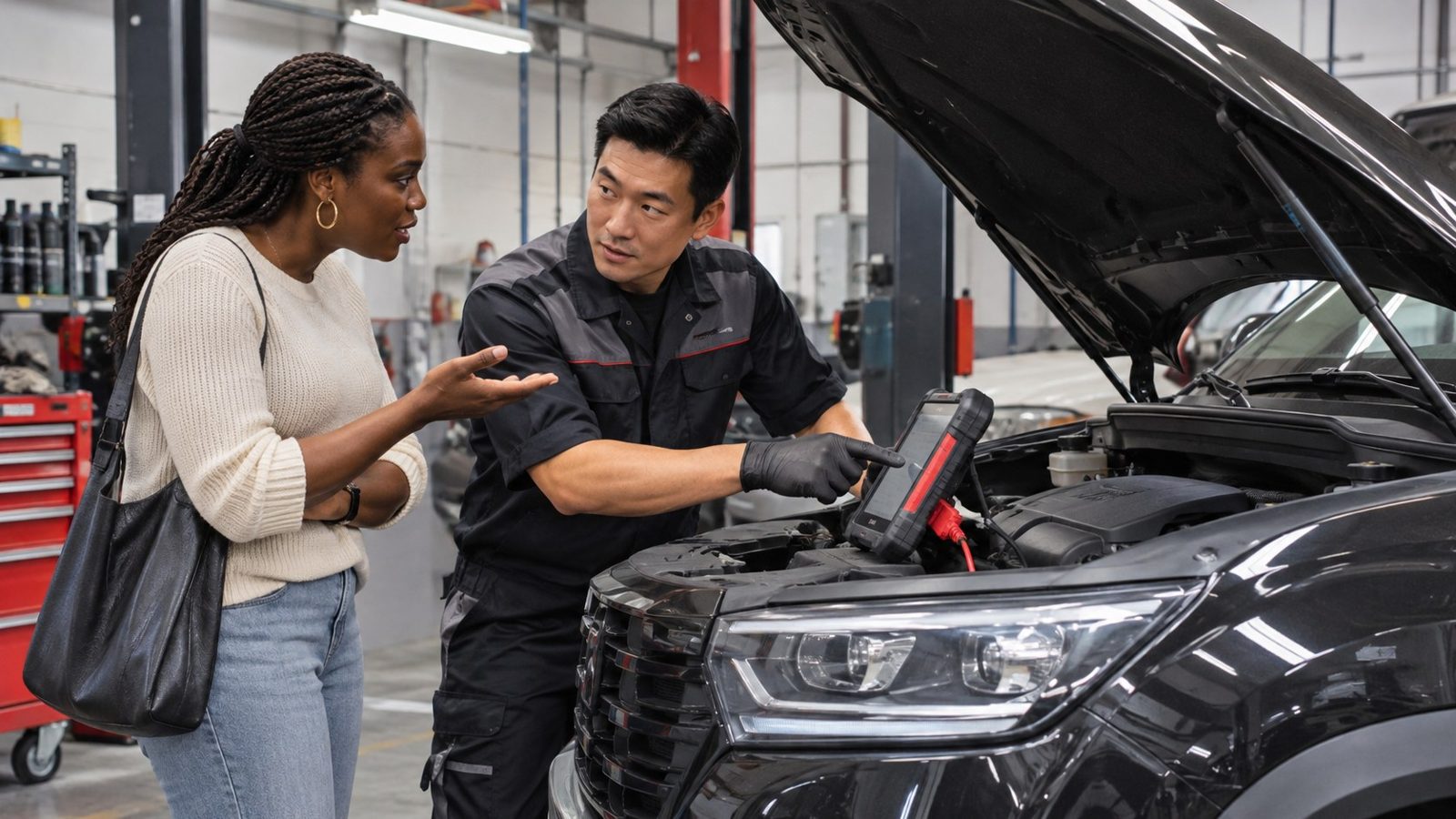
Your Chinese Car Needs a Spare Part. How Long Will You Have to Wait?
Worried about Chinese car spare parts in the UAE? Learn what affects availability, how to check stock and what to do when a repair is delayed.
By SiniDrive Editorial
Imagine it's a normal Tuesday morning.
You're reversing out of a parking space when you hear a horrible scraping sound.
You've caught the edge of a concrete pillar.
The car still drives. Nobody is hurt. But the rear bumper is damaged and one parking sensor has stopped working.
Annoying? Absolutely.
A disaster? Probably not.
You call the dealership expecting a straightforward repair.
Then comes the question you hadn't considered when buying the car.
"We need to check whether the replacement part is available."
And suddenly you remember your uncle's warning.
"Chinese cars are fine until you need spare parts."
Is he right?
Not necessarily. But this is one concern worth understanding before buying a vehicle.
Not all spare parts are equally difficult to find
When people talk about spare parts, they often imagine engine components.
But there are several different categories.
Routine maintenance parts include filters, brake components, spark plugs where applicable and other regularly replaced items.
Mechanical parts include engine, transmission, suspension and cooling-system components.
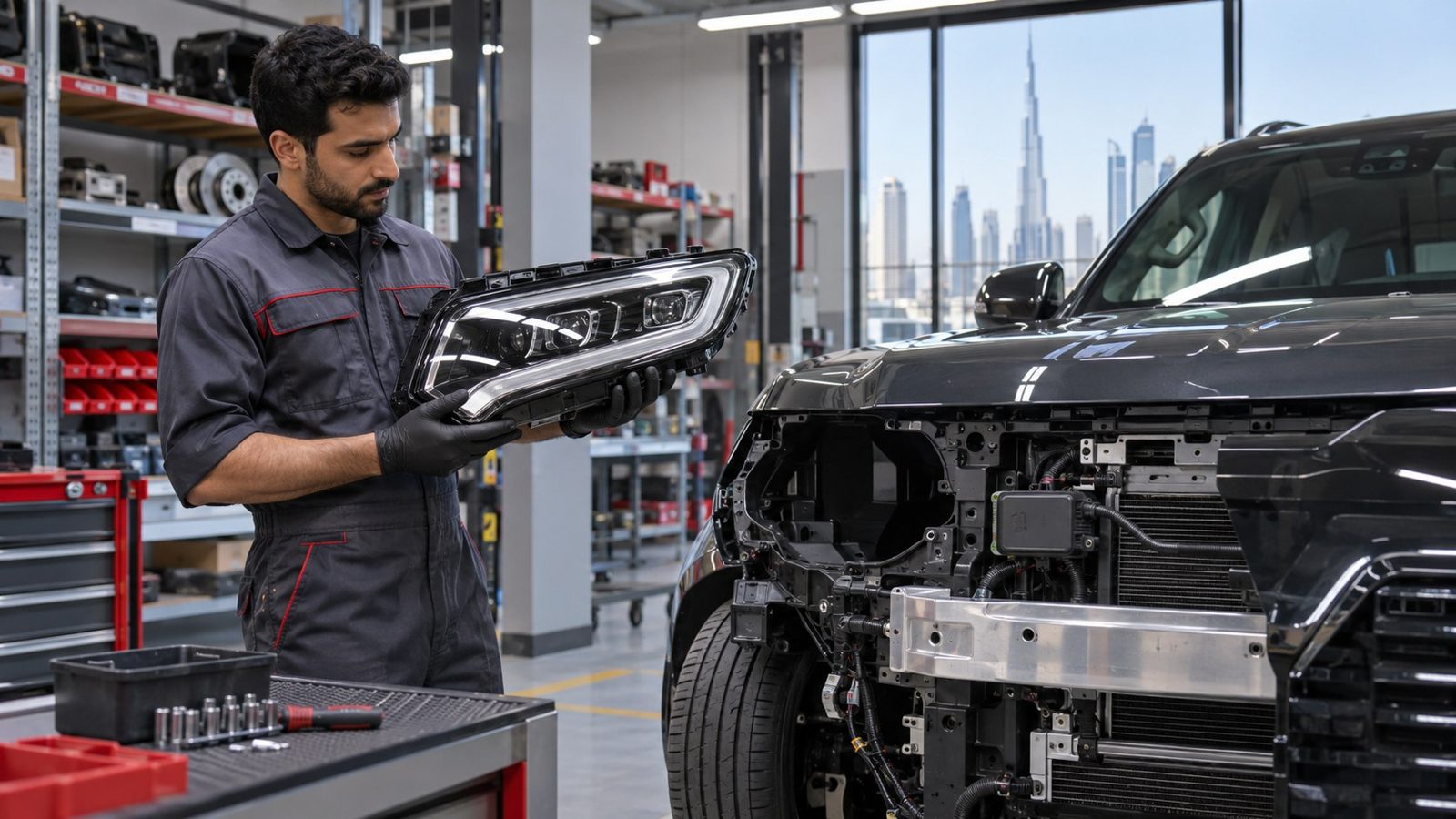
Body and electronic parts include bumpers, headlights, cameras, radar sensors, infotainment units and specially shaped glass.
These categories may have very different availability.
A workshop might have oil filters in stock but need to order an uncommon headlamp assembly.
And here's the surprising part: a relatively minor accident can sometimes keep a modern car off the road longer than a routine mechanical problem.
That's because today's vehicles contain sensors, cameras, wiring and electronic modules inside parts that once seemed simple.
Why does the brand's UAE dealer matter?
Think of two restaurants.
One has a well-established supply network and branches across the country.
The other opened recently and orders certain ingredients only when customers request them.
Both might serve excellent food.
But their ability to handle unexpected demand is different.
Car distributors face a similar challenge.
A dealer with a large operating network, local parts inventory and technical support may be better equipped to handle repairs.
A newer distributor may still be developing its infrastructure.
That doesn't automatically make an established brand perfect or a newer brand unreliable.
It means after-sales capability deserves as much attention as the vehicle's showroom features.
Five questions to ask before buying
You don't need to understand car mechanics.
Simply ask the dealer:
-
Which replacement parts do you stock in the UAE?
-
Are bumpers, headlights, windscreens and cameras available locally?
-
If a part needs importing, how is the estimated delivery date communicated?
-
Can I obtain parts directly, or only through authorised workshops?
-
What support is available if a warranty-related repair takes an extended period?
Ask for a written response where possible.
If you already own the car, provide the VIN when enquiring about parts. It helps the parts department identify the exact component.
Genuine, OEM and aftermarket parts: what's the difference?
The terminology can be confusing.
Genuine parts are supplied under the vehicle manufacturer's official parts arrangements.
OEM parts may be manufactured by a supplier involved in producing original equipment, but the term is sometimes used loosely in retail listings.
Aftermarket parts are produced for replacement use outside the manufacturer's official parts supply.
An aftermarket part isn't automatically unsafe or unsuitable.
But compatibility, quality and certification matter.
For safety-critical components, high-voltage EV systems, structural elements and advanced driver-assistance equipment, use qualified repairers and manufacturer-approved procedures.
A cheap sensor that doesn't calibrate properly may not be a bargain at all.
What if the dealer says the part isn't available?
First, get the diagnosis in writing.
Ask for the part number, whether the replacement is necessary for safe operation, the current stock status and the estimated availability date.
If the vehicle is still driveable, ask a qualified technician to confirm that it is safe and legal to use.
Never assume a vehicle is safe simply because the engine starts.
If the repair falls under warranty, request written confirmation of the claim and preserve all correspondence.
The UAE's consumer-protection framework includes obligations concerning spare-parts availability, maintenance arrangements and warranty service. The exact application depends on the circumstances and relevant regulations.
If there's an unresolved dispute, use the appropriate consumer-protection authority rather than relying only on verbal conversations with the workshop.
Can you buy parts independently?
Sometimes.
Independent parts suppliers and specialist garages may be able to source suitable components.
But don't order a part based only on a photo or model name.
The exact vehicle year, trim, engine, electronics and market specification can affect compatibility.
A Chinese-market part may look identical to a UAE-market part but differ in connectors or software.
Before ordering, confirm the part number, seller's return policy, warranty and installation requirements.
The best way to avoid surprises
Before buying a car, investigate after-sales support with the same enthusiasm you bring to the test drive.
Check the distributor's service network.
Ask current owners about real repair experiences, while remembering that one complaint or one glowing review cannot represent an entire brand.
Request quotations for commonly damaged items such as headlights and windscreens.
Compare insurance options.
Most importantly, choose the particular model and dealer based on evidence rather than assumptions about its country of origin.
A car isn't a good deal only because it's affordable to buy. It should also be practical to repair.
If you're waiting for a spare part today
Keep a simple record containing:
- Vehicle VIN and registration details
- Workshop job-card number
- Written diagnosis
- Required part number
- Whether the part is under warranty
- Expected availability date
- Every update received from the dealer
Documentation makes follow-up easier and helps if a formal complaint becomes necessary.
Editorial references
Last editorial review: 11 November 2026. Parts lead times must be confirmed for each exact model and part; no universal waiting-time estimate is assumed.